
Cultural preparation
Updated November 20, 2026 · 1 min read
How we help you settle into life in Korea.
When you land
- Airport pickup and transfer to your accommodation
- Meet your 24/7 support team
- A SIM card and a local bank account for your salary
Your orientation week
Six hours of Korean lessons, culture and history, and time with your group, plus a free 40-hour online cultural foundation course.
- Gyeongbokgung Palace in hanbok (traditional dress)
- The War Memorial of Korea
- A cooking class: bulgogi, gimbap and kimchi pancakes
- Taekwondo at a local dojang
- A K-pop dance class
Online TEFL and Placement Only teachers join a weekend program in Seoul with a welcome dinner, palace tour and tea tasting.
Weekends to look forward to
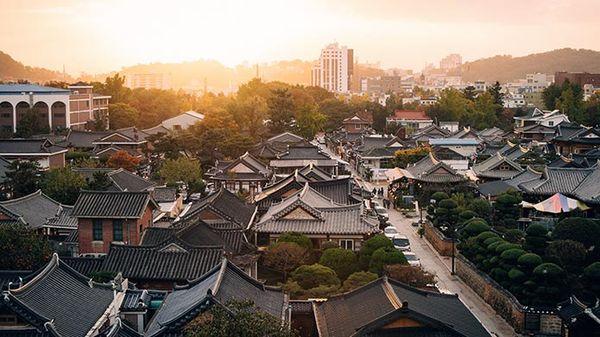
Teahouses in Insadong, sunsets over a hanok village, and a weekend in Busan, Korea's second city.
Get to know Korea
Korea's story runs from the ancient Gojoseon kingdom through the Three Kingdoms and the Goryeo dynasty, which gave Korea its name. The Joseon dynasty (1392-1897) built a Confucian society and created the Korean alphabet, Hangeul. After Japanese rule and the Korean War, South Korea grew into a democratic, high-tech powerhouse. Respect for elders and seniority, from Confucian tradition, still shapes daily life.
- Seoul mixes royal palaces like Gyeongbokgung with skyscrapers and N Seoul Tower. Incheon is the main airport and a big port
- Gangwon has mountains, ski resorts, Pyeongchang and Seoraksan National Park
- Busan has beaches, seafood and Gamcheon Culture Village, and Gyeongju was the ancient Silla capital
- Jeonju is the food capital with a traditional hanok village, and Boseong has green tea fields
- Jeju Island has volcanic scenery, beaches and hiking trails
Did you know?
- Four is an unlucky number, and many buildings skip the fourth floor
- Hangeul was created in the 15th century and is famously logical and easy to learn
- The flag's red and blue circle stands for yin and yang
- The national flower is the rose of Sharon (mugunghwa)
Was this helpful?