
Cultural preparation
Updated November 20, 2026 · 1 min read
How we help you settle into life in Cambodia.
When you land
- Airport pickup by tuk-tuk in Phnom Penh (if you land within two days of your start date)
- Meet your 24/7 support team
- Help with a SIM card and a local bank account
Your orientation
Learn basic Khmer for markets, taxis and meals, with culture and history lessons from local staff and former foreign teachers, including what is expected in a Cambodian classroom.
- A local market
- A Buddhist temple visit and a blessing from a monk
- The Royal Palace
- The Killing Fields
- A welcome dinner
Weekends to look forward to
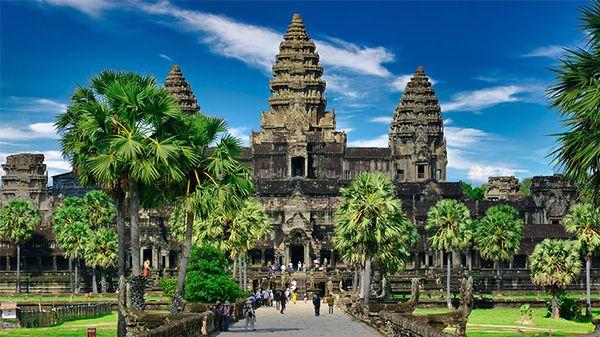
Angkor Wat, cheap and delicious food, and friends in every corner of the country.
Get to know Cambodia
From the 9th to the 15th century the Khmer Empire ruled much of Southeast Asia and built the temples of Angkor, including Angkor Wat, the largest religious monument in the world. After French rule, Cambodia became independent in 1953. The Khmer Rouge regime of 1975-1979 led to genocide, a history still felt today. Cambodia is now a constitutional monarchy, and Theravada Buddhism shapes daily life.
- Phnom Penh, the capital, sits where three rivers meet, with the Royal Palace, the Silver Pagoda and the Tuol Sleng Genocide Museum
- Siem Reap in the north is the gateway to Angkor
- The south coast has Sihanoukville and quieter islands like Koh Rong
- Battambang in the west is known for French colonial buildings and its bamboo train
- The northeast is remote, with waterfalls, national parks and minority communities
Did you know?
- Angkor Wat is on the national flag
- The national animal is the kouprey, a wild ox
- Khmer New Year (Chaul Chnam Thmey) is in mid-April
- The Mekong is home to rare Irrawaddy dolphins
Was this helpful?